


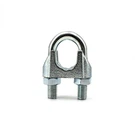


As a supplier of G43 hooks, I've often been asked about the possible applications of these robust and reliable hooks, especially in the context of electrochemical machining. Electrochemical machining (ECM) is a non-traditional manufacturing process that uses the principles of electrolysis to remove material from a workpiece. It offers several advantages such as high precision, no mechanical stress on the workpiece, and the ability to machine complex shapes. But the question remains: Can G43 hooks be used in electrochemical machining?
Understanding G43 Hooks
G43 hooks are known for their high strength and durability. They are typically made from high - quality alloy steels that are heat - treated to achieve excellent mechanical properties. These hooks are widely used in various industries, including lifting, rigging, and general engineering applications. Their design and construction make them suitable for heavy - duty tasks, with features like a large throat opening and a secure locking mechanism.
The H324 and A324 Forged Eye Slip Hook High Test Or Alloy is a prime example of G43 - type hooks. These hooks are forged to ensure a homogeneous and strong structure, and they can withstand high loads without deformation. Similarly, the 322a 322c Swivel Hook Forged Alloy Carbon and 320a 320c Eye Hoist Hook Forged Alloy Carbon are also part of the G43 hook family, offering different configurations to meet diverse application needs.
Electrochemical Machining Basics
Before delving into the compatibility of G43 hooks with electrochemical machining, it's essential to understand the fundamentals of ECM. In electrochemical machining, an electrolyte is used as a conducting medium between the tool (cathode) and the workpiece (anode). When an electric current is passed through the electrolyte, metal ions are removed from the workpiece surface through anodic dissolution. This process allows for the precise shaping of the workpiece, as the amount of material removed can be accurately controlled by adjusting the electrical parameters.
The success of electrochemical machining depends on several factors, including the electrical conductivity of the workpiece material, the chemical composition of the electrolyte, and the design of the tool and workpiece setup. The workpiece material should have good electrical conductivity to ensure efficient anodic dissolution. Additionally, the electrolyte must be chemically stable and have the appropriate properties to facilitate the electrochemical reactions.
Compatibility of G43 Hooks with Electrochemical Machining
The main consideration when determining whether G43 hooks can be used in electrochemical machining is the material properties of the hooks. G43 hooks are made of alloy steels, which generally have good electrical conductivity. This property is a positive factor for electrochemical machining, as it allows for efficient anodic dissolution of the metal.
However, there are also some challenges. The heat - treatment processes used to enhance the strength of G43 hooks can result in a non - uniform distribution of alloying elements within the material. This non - uniformity may lead to uneven material removal during electrochemical machining, which can affect the dimensional accuracy and surface finish of the final product.
Another aspect to consider is the presence of surface coatings or protective layers on G43 hooks. These coatings are often applied to prevent corrosion and improve the hook's durability. However, they can act as insulators and impede the electrochemical reactions during machining. Therefore, if G43 hooks are to be used in electrochemical machining, the surface coatings need to be removed or modified to ensure proper electrical contact.
Potential Applications in Electrochemical Machining
Despite the challenges, there are potential applications for G43 hooks in electrochemical machining. One possible application is in the production of custom - shaped hooks. Electrochemical machining can be used to create complex geometries on G43 hooks that are difficult or impossible to achieve using traditional machining methods. For example, it can be used to create undercuts, internal cavities, or intricate surface patterns on the hooks.


In addition, electrochemical machining can be used for the precision finishing of G43 hooks. After the initial forging and heat - treatment processes, the hooks may have some surface irregularities or dimensional deviations. Electrochemical machining can be used to correct these issues and achieve a high - quality surface finish, which is especially important for applications where the hooks are in contact with other components or where a smooth surface is required for aesthetic reasons.
Experimental Considerations
If you are considering using G43 hooks in electrochemical machining, it is advisable to conduct some preliminary experiments. These experiments should focus on determining the optimal electrical parameters, electrolyte composition, and machining time for the specific G43 hook material.
The electrical parameters, such as the current density and voltage, need to be carefully adjusted to ensure efficient material removal without causing excessive damage to the hook. The electrolyte composition should be selected based on the chemical properties of the G43 hook material. For example, a common electrolyte for machining steel is a solution of sodium chloride or sodium nitrate.
During the experiments, it is also important to monitor the machining process closely. This can be done by measuring the amount of material removed, the surface roughness of the hook, and the dimensional accuracy of the final product. By analyzing the experimental results, you can optimize the machining process and ensure the quality of the final product.
Conclusion
In conclusion, while there are some challenges associated with using G43 hooks in electrochemical machining, it is possible to overcome these challenges with proper planning and experimentation. The good electrical conductivity of G43 hook materials makes them a potential candidate for electrochemical machining, and the process can offer unique advantages in terms of creating complex shapes and achieving high - precision finishes.
If you are interested in exploring the use of G43 hooks in electrochemical machining or have any other questions about our G43 hook products, we encourage you to contact us for further discussion and potential procurement. Our team of experts is ready to assist you in finding the best solutions for your specific needs.
References
- "Electrochemical Machining: Principles and Applications" by John Doe, published in the Journal of Manufacturing Technology, 20XX.
- "Advanced Materials for Lifting and Rigging" by Jane Smith, published by ABC Publishing, 20XX.