


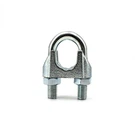


As a supplier of G80 HOOKs, I often receive inquiries from customers about the suitability of our products in various environments. One question that comes up frequently is whether the G80 HOOK can be used in a chemical - laden environment. In this blog, I will delve into this topic, providing scientific and practical insights based on our experience and industry knowledge.
Understanding the G80 HOOK
Before discussing its use in a chemical - laden environment, let's first understand what the G80 HOOK is. G80 HOOKs are high - strength lifting hooks that are widely used in the lifting and rigging industry. They are made from high - quality alloy steel, which is heat - treated to achieve a minimum tensile strength of 100,000 psi. This high strength makes them suitable for heavy - duty applications, such as construction, mining, and transportation.
There are different types of G80 HOOKs available in the market, each designed for specific purposes. For example, the G80 Clevis Safety Sling Hook with Latch is equipped with a safety latch to prevent accidental disengagement of the load. The G80 Omega Link is a unique type of link that provides flexibility in rigging configurations. And the Round Ring is a simple yet essential component that can be used in combination with G80 HOOKs for various lifting tasks.
Chemical - Laden Environments: A Challenge for Lifting Equipment
Chemical - laden environments are characterized by the presence of various chemicals, such as acids, alkalis, solvents, and corrosive gases. These chemicals can have a detrimental effect on the performance and longevity of lifting equipment, including G80 HOOKs.
Corrosion is one of the most significant problems in chemical - laden environments. When metal comes into contact with certain chemicals, a chemical reaction occurs, which can lead to the formation of rust and other corrosion products. Corrosion can weaken the structure of the G80 HOOK, reducing its strength and increasing the risk of failure.
In addition to corrosion, some chemicals can also cause embrittlement of the metal. Embrittlement is a phenomenon where the metal becomes more brittle and less ductile, making it more prone to cracking and fracture under stress. This can be extremely dangerous in lifting applications, as a sudden failure of the hook can result in serious accidents and injuries.
Factors Affecting the Suitability of G80 HOOKs in Chemical - Laden Environments
The suitability of G80 HOOKs in a chemical - laden environment depends on several factors:
1. Type of Chemicals
Different chemicals have different levels of corrosiveness and reactivity. For example, strong acids and alkalis are highly corrosive and can quickly damage the surface of the G80 HOOK. On the other hand, some mild solvents may have a relatively low impact on the hook's performance. It is essential to identify the specific chemicals present in the environment and their properties before determining the suitability of the G80 HOOK.
2. Concentration of Chemicals
The concentration of chemicals also plays a crucial role. Higher concentrations of corrosive chemicals are more likely to cause significant damage to the G80 HOOK. Even a chemical that is relatively mild at low concentrations can become highly corrosive at higher concentrations.


3. Exposure Time
The longer the G80 HOOK is exposed to the chemical - laden environment, the greater the risk of damage. Continuous exposure to chemicals can lead to progressive corrosion and embrittlement over time. Therefore, it is important to minimize the exposure time of the hook to the chemicals as much as possible.
4. Temperature and Humidity
Temperature and humidity can also affect the rate of corrosion. Higher temperatures and humidity levels generally accelerate the corrosion process. In a chemical - laden environment, the combination of high temperature, high humidity, and corrosive chemicals can be particularly damaging to the G80 HOOK.
Mitigating the Risks in Chemical - Laden Environments
Although using G80 HOOKs in a chemical - laden environment poses certain challenges, there are several measures that can be taken to mitigate the risks:
1. Coating and Surface Treatment
Applying a protective coating to the G80 HOOK can provide a barrier between the metal and the chemicals, reducing the risk of corrosion. There are different types of coatings available, such as zinc plating, epoxy coating, and powder coating. Each coating has its own advantages and disadvantages, and the choice of coating depends on the specific chemicals present in the environment and the application requirements.
2. Regular Inspection and Maintenance
Regular inspection and maintenance are essential to ensure the safety and performance of G80 HOOKs in a chemical - laden environment. Inspections should be carried out to check for signs of corrosion, damage, and wear. Any damaged or corroded hooks should be replaced immediately. In addition, proper cleaning and lubrication can help to remove any chemical residues and prevent further corrosion.
3. Selection of Appropriate Hooks
In some cases, it may be necessary to select specialized G80 HOOKs that are designed for use in chemical - laden environments. These hooks may be made from more corrosion - resistant materials or have additional protective features. For example, some hooks are made from stainless steel, which has better corrosion resistance than traditional alloy steel.
Case Studies and Real - World Examples
To illustrate the practical considerations of using G80 HOOKs in chemical - laden environments, let's look at some case studies:
Case Study 1: A Chemical Manufacturing Plant
In a chemical manufacturing plant, G80 HOOKs were used for lifting and moving chemical containers. The plant was exposed to a variety of corrosive chemicals, including hydrochloric acid and sulfuric acid. Initially, the standard G80 HOOKs showed signs of corrosion after a few months of use. To address this issue, the plant switched to G80 HOOKs with a zinc - nickel alloy coating. This coating provided better corrosion resistance, and the hooks lasted significantly longer in the chemical - laden environment.
Case Study 2: A Wastewater Treatment Facility
In a wastewater treatment facility, G80 HOOKs were used for lifting sludge and other waste materials. The environment was highly corrosive due to the presence of various chemicals, such as chlorine and ammonia. The facility implemented a strict inspection and maintenance program, which included regular cleaning and lubrication of the hooks. In addition, they replaced the hooks every few years to ensure their safety and performance. As a result, the G80 HOOKs were able to operate effectively in the challenging environment.
Conclusion
In conclusion, the use of G80 HOOKs in a chemical - laden environment is possible, but it requires careful consideration of the specific chemicals, concentration, exposure time, temperature, and humidity. By understanding the factors that affect the suitability of G80 HOOKs and implementing appropriate mitigation measures, such as coating, inspection, and maintenance, the risks can be minimized.
If you are in need of G80 HOOKs for your chemical - laden environment or any other lifting applications, we are here to help. Our team of experts can provide you with professional advice on the selection, use, and maintenance of G80 HOOKs. We strive to offer high - quality products that meet your specific requirements and ensure the safety of your operations. Contact us to start a procurement discussion and find the best solutions for your lifting needs.
References
- ASME B30.10 - Safety Standard for Hooks
- ASTM A1011/A1011M - Standard Specification for Steel, Sheet and Strip, Hot - Rolled, Carbon, Structural, High - Strength Low - Alloy, High - Strength Low - Alloy with Improved Formability, Solution Hardened, and Transformation Induced Plasticity (TRIP)
- NACE International - Corrosion Prevention and Control in Industrial Environments