


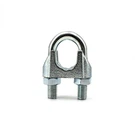


Hey there! I'm a supplier of G80 HOOKs, and I often get asked some pretty interesting questions from my customers. One of the most thought - provoking ones is, "Can the G80 HOOK be used in a vacuum environment?" Let's dig into this topic and find out the answer.


First off, let's talk a bit about what the G80 HOOK is. G80 HOOKs are high - strength lifting hooks that are widely used in various industries, like construction, manufacturing, and transportation. They're known for their durability and ability to handle heavy loads. We also offer related products such as the G80 Pear Link and the G80 Welded Master Link Assembly, which work in tandem with the G80 HOOKs in many lifting operations. And of course, the G80 Eye Foundry Hook is another popular option in our product line.
Now, let's get to the heart of the matter: the vacuum environment. A vacuum is a space where there's an extremely low pressure, almost no air or gas. This kind of environment can have some unique effects on materials and equipment.
Material Considerations
The G80 HOOKs are typically made from high - grade alloy steel. This steel is chosen for its excellent strength - to - weight ratio and resistance to wear and tear. In a vacuum environment, one of the main concerns is outgassing. Outgassing is when a material releases gas molecules that were trapped within it. This can be a big problem in a vacuum because the released gas can contaminate the vacuum chamber or interfere with sensitive equipment.
Most high - quality alloy steels used in G80 HOOKs have relatively low outgassing rates. However, it still depends on the manufacturing process. If the steel has been properly heat - treated and degassed during production, the outgassing issue can be minimized. But if there are impurities or trapped gases in the steel, they could be released in a vacuum.
Another aspect to consider is the effect of the vacuum on the surface of the hook. In a normal atmosphere, there's a thin layer of oxide on the steel surface that helps protect it from corrosion. In a vacuum, this oxide layer might change or even disappear over time. This could potentially lead to increased corrosion if the hook is later exposed to an oxygen - containing environment.
Mechanical Properties
The mechanical properties of the G80 HOOK, like its strength and toughness, are also important. In a vacuum, there's no air resistance or buoyancy. This means that the forces acting on the hook during lifting operations are a bit different compared to normal conditions.
The lack of air also means that there's no cooling effect from air convection. When a hook is under load, it generates heat due to friction and internal stresses. In a normal environment, the air helps dissipate this heat. In a vacuum, the heat can build up more easily, which could potentially affect the mechanical properties of the steel. If the temperature rises too high, the steel could lose some of its strength and become more brittle.
However, if the lifting operations in the vacuum are relatively short - term and the loads are within the hook's rated capacity, the heat build - up might not be a significant issue.
Compatibility with Vacuum Systems
If the G80 HOOK is going to be used in a vacuum system, it needs to be compatible with the other components of the system. For example, the connection points between the hook and the lifting mechanism need to be air - tight. Any leaks at these points could disrupt the vacuum and cause problems for the entire system.
Also, the surface finish of the hook can play a role. A smooth surface finish is generally better in a vacuum because it reduces the chance of gas molecules getting trapped in surface irregularities.
Testing and Certification
Before using a G80 HOOK in a vacuum environment, it's crucial to have it tested. There are specialized testing facilities that can simulate vacuum conditions and measure the hook's performance. These tests can check for outgassing, changes in mechanical properties, and compatibility with vacuum systems.
If the hook passes these tests, it might be possible to get it certified for use in a vacuum. Certification provides assurance that the hook meets the necessary standards for safe operation in a vacuum environment.
Real - World Applications
In some real - world scenarios, G80 HOOKs might be used in a vacuum environment. For example, in space exploration or certain high - tech manufacturing processes that require a vacuum. In space, where there's a natural vacuum, the hooks could be used for assembling or moving components in orbit. However, in these cases, the hooks would need to be specifically designed and tested for space - grade applications.
In high - tech manufacturing, like semiconductor production, a vacuum is often used to prevent contamination. G80 HOOKs could potentially be used for lifting and moving heavy equipment within the vacuum chamber, as long as they meet the strict requirements of the manufacturing process.
Conclusion
So, can the G80 HOOK be used in a vacuum environment? The answer is, it depends. With proper testing, careful consideration of material properties, and compatibility with the vacuum system, it's possible to use G80 HOOKs in a vacuum. But it's not something that can be done without proper preparation.
If you're thinking about using G80 HOOKs in a vacuum environment, I'd highly recommend getting in touch with us. We have a team of experts who can help you assess whether our hooks are suitable for your specific application. We can also provide guidance on testing and certification.
Whether you need a single G80 HOOK or a large quantity for your project, we're here to help. We pride ourselves on providing high - quality products and excellent customer service. So, if you're interested in learning more or making a purchase, don't hesitate to reach out. We can have a detailed discussion about your needs and find the best solution for you.
Let's work together to ensure that your lifting operations, whether in a vacuum or a normal environment, are safe and efficient.
References
- "Materials Science and Engineering: An Introduction" by William D. Callister, Jr. and David G. Rethwisch
- "Vacuum Technology: A Practical Guide" by P. A. Redhead, J. P. Hobson, and E. V. Kornelsen
- Industry standards for G80 lifting equipment, such as those set by relevant national and international organizations.