


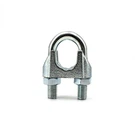


Marking a shackle for identification is a crucial step in the shackle business, especially when you're a shackle supplier like me. It helps in tracking the product, ensuring quality control, and providing important information to the end - users. In this blog, I'll share some common and effective ways to mark shackles for easy identification.
Why Mark Shackles?
Before we get into the how - to part, let's talk about why marking shackles is so important. First of all, it's a matter of safety. When a shackle is used in a critical application, like in lifting heavy loads or in marine operations, knowing its specifications, such as its working load limit (WLL), material, and manufacturing date, can prevent accidents.
Secondly, it's for quality control. By marking each shackle, we can trace back its production history, including the batch it came from, the manufacturing process, and the quality checks it has undergone. This is especially useful if there are any issues with the product later on.
Lastly, it's a way to build brand recognition. A well - marked shackle with our company's logo and information can act as a marketing tool, making our products more recognizable in the market.
Methods of Marking Shackles
Stamping
Stamping is one of the oldest and most common methods of marking shackles. It involves using a die to imprint the desired information onto the surface of the shackle. The die is usually made of hardened steel and can be customized to include our company logo, the shackle's size, WLL, and other relevant details.
The advantage of stamping is that it's a permanent mark. Once the information is stamped onto the shackle, it won't easily fade or wear off, even with regular use. However, stamping can be a bit rough on the surface of the shackle, and it might create small stress points, which could potentially affect the strength of the shackle if not done correctly.
Laser Marking
Laser marking has become increasingly popular in recent years. It uses a high - powered laser to etch the information onto the shackle's surface. The laser can create very precise and detailed marks, including small letters and complex logos.
One of the main benefits of laser marking is that it's a non - contact process. This means there's no physical force applied to the shackle, so there's no risk of creating stress points. Also, laser - marked shackles look very professional and clean. However, laser marking equipment can be quite expensive, and the process might be slower compared to stamping.
Electro - Etching
Electro - etching is another option for marking shackles. It works by using an electric current to transfer the mark onto the surface of the shackle. The process involves applying a stencil with the desired information onto the shackle and then passing an electric current through an electrolyte solution.
Electro - etching is a relatively fast and cost - effective method. It can produce clear and permanent marks. But, like stamping, it might not be as precise as laser marking, especially when it comes to very small or detailed information.
Information to Include on the Mark
When marking a shackle, there are several key pieces of information that we should include.
The first is the working load limit (WLL). This is the maximum load that the shackle is designed to safely carry. It's usually expressed in tons or kilograms, and it's crucial for the end - user to know this information to avoid overloading the shackle.
Next, we should include the size of the shackle. This can be the diameter of the bow or the pin, depending on the type of shackle. The size information helps the user select the right shackle for their specific application.
Our company logo and name are also important. This not only helps with brand recognition but also provides a way for the end - user to contact us if they have any questions or need more information about the shackle.


Other information that can be included is the manufacturing date or batch number. This is useful for quality control and tracking purposes. If there's ever an issue with a particular batch of shackles, we can easily identify and recall them.
Examples of Shackles and Their Marking
Let's take a look at some of the shackles we supply and how they are marked.
The Jis Type Screw Pin Chain Dee Shackle with Counter Sunk Head is a popular choice in many industries. For this type of shackle, we usually use laser marking to ensure a precise and professional - looking mark. The mark includes our logo, the size of the shackle, its WLL, and the manufacturing date.
The Trawling Dee Bow Shackles are commonly used in the fishing industry. Since these shackles are often exposed to harsh marine environments, we use stamping to mark them. The stamping is deep enough to ensure the mark stays visible even after long - term use in saltwater. The mark on these shackles includes the WLL, size, and our company name.
The US Type Forged Round Pin Chain Dee Shackle G215 is another well - known product in our catalog. We use electro - etching to mark these shackles. The electro - etched mark provides a good balance between cost - effectiveness and clarity. It includes all the necessary information, such as the WLL, size, and batch number.
Conclusion
Marking a shackle for identification is an essential part of our business as a shackle supplier. By choosing the right marking method and including the necessary information on the mark, we can ensure the safety of our customers, maintain quality control, and build a strong brand.
If you're in the market for high - quality shackles or have any questions about our marking processes, don't hesitate to reach out. We're always here to help you find the right shackle for your needs and provide all the information you require.
References
- Shackle Manufacturing Handbook
- Industry Standards for Shackle Marking