


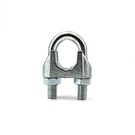


DIN582 is a German standard that defines the requirements for threaded rods, which are used in various industries such as construction, machinery manufacturing, and automotive. As a DIN582 supplier, I have witnessed firsthand how this standard can significantly impact product life - cycle management. In this blog post, I will explore the various ways in which DIN582 affects different stages of the product life - cycle.
1. Product Design Stage
At the product design stage, DIN582 plays a crucial role in setting the design guidelines and specifications. The standard provides detailed information on the dimensions, materials, and mechanical properties of threaded rods. Designers can refer to DIN582 to ensure that the threaded rods they incorporate into their products meet the necessary strength, durability, and precision requirements.
For example, in the construction industry, when designing a building structure that uses threaded rods for reinforcement or for connecting different structural components, adhering to DIN582 helps in ensuring the overall safety and stability of the building. If a designer chooses a non - compliant threaded rod, it may lead to premature failure of the structure, resulting in costly repairs or even endangering human lives.
The clear specifications in DIN582 also enable designers to optimize the use of materials. By knowing the exact requirements for rod diameter, pitch, and material grade, they can select the most cost - effective yet high - performing options. This reduces waste and helps in achieving sustainable design goals.
2. Sourcing and Procurement
As a DIN582 supplier, I understand the importance of quality control during the sourcing and procurement processes. Our customers rely on us to provide threaded rods that are compliant with the DIN582 standard. This means that we have to carefully screen our raw material suppliers and manufacturing processes to ensure that every rod we produce meets the exact requirements of the standard.


When companies are sourcing DIN582 threaded rods, they have the confidence that they are getting a product with consistent quality. This reduces the risk of receiving defective products, which can cause production delays and additional costs. For instance, a machinery manufacturing company that uses DIN582 threaded rods in its equipment can be assured of the rods' reliability, which in turn helps in maintaining the overall quality of their machinery.
Moreover, the standardization provided by DIN582 simplifies the procurement process. Companies do not have to spend excessive time and resources in negotiating custom specifications for threaded rods. They can simply refer to the standard and make purchasing decisions more efficiently. For example, if a company needs to purchase a large quantity of threaded rods for a project, they can quickly identify suppliers who can provide DIN582 - compliant products, such as the G80 Master Link A342, Bs 462 Hot Dipped Galvanized Malleable Wire Rope Clips Clamps, and US Type Forged Screw Pin Anchor or Bow Shackle G209.
3. Production and Manufacturing
During the production and manufacturing stages, DIN582 acts as a quality control benchmark. The standard dictates the manufacturing processes, such as machining, heat treatment, and surface finishing, to ensure that the final products are of high quality. Our manufacturing facilities are equipped to follow these processes precisely to produce DIN582 - compliant threaded rods.
For example, the standard specifies the tolerances for thread dimensions. This requires our production team to use high - precision machining equipment to ensure that the threads are accurate within the specified range. Any deviation from the standard can lead to a non - compliant product, which we avoid through strict quality control measures at every step of the production process.
In addition, DIN582 also provides guidelines on the testing and inspection methods. This allows us to conduct regular quality checks during production. We perform tests such as tensile strength tests, hardness tests, and thread profile inspections to verify that our products meet the standard requirements. By adhering to these testing procedures, we can identify and correct any potential issues early in the production process, reducing the likelihood of producing defective products and minimizing waste.
4. Product Use and Maintenance
In the product use phase, the compliance with DIN582 ensures the safety and reliability of the products. Threaded rods that meet the standard are less likely to fail under normal operating conditions. For example, in automotive applications, DIN582 - compliant threaded rods are used in engine components, suspension systems, and various other parts. Their high - quality and consistent performance contribute to the overall safety and drivability of the vehicle.
Moreover, the standardization also simplifies the maintenance process. If a threaded rod needs to be replaced, maintenance personnel can easily find a replacement that meets the DIN582 standard. This reduces the downtime of the equipment or structure, as they do not have to spend time searching for a custom - made replacement.
The surface finish requirements specified in DIN582 also enhance the corrosion resistance of the threaded rods. This is especially important in applications where the rods are exposed to harsh environments, such as in offshore platforms or outdoor construction sites. By preventing corrosion, the service life of the rods is extended, reducing the frequency of replacements and maintenance costs.
5. Product Disposal and Recycling
At the end of the product life - cycle, the materials used in DIN582 - compliant threaded rods can be easily recycled. Since the standard defines the material grades and compositions, it becomes easier to identify and separate the materials for recycling. For example, most DIN582 threaded rods are made of steel, which is one of the most recycled materials in the world.
Recycling DIN582 - compliant threaded rods helps in conserving natural resources and reducing environmental impact. It also promotes a circular economy, where materials are reused instead of being discarded. By producing products that are easy to recycle, we, as a DIN582 supplier, contribute to the overall sustainability of the industry.
Conclusion
In conclusion, DIN582 has a far - reaching impact on product life - cycle management. From the initial design stage to the final disposal and recycling phase, the standard provides a framework for ensuring quality, safety, and sustainability. As a DIN582 supplier, we are committed to providing high - quality products that comply with this standard, helping our customers to optimize their product life - cycle management.
If you are interested in purchasing DIN582 - compliant products or have any questions about our offerings, please feel free to contact us for procurement discussions. We look forward to working with you to meet your threaded rod needs.
References
- "DIN Standards Handbook: Mechanical Components", Deutsche Institut für Normung e.V.
- Industry reports on the use of threaded rods in construction and manufacturing.