


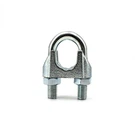


Hey there! As a shackle supplier, I often get asked about the maximum load capacity of shackles. It's a crucial question, especially for those who rely on these little but mighty pieces of hardware in their daily operations. So, let's dive right in and explore what determines the maximum load capacity of a shackle.
First off, what exactly is a shackle? Well, it's a U-shaped piece of metal with a pin or bolt across the opening, used to connect different parts in a variety of applications. You can find them in industries like construction, shipping, and even in some heavy - duty off - road vehicles.
The maximum load capacity of a shackle, also known as the working load limit (WLL), is the maximum amount of weight that the shackle can safely support under normal working conditions. This is not to be confused with the ultimate breaking strength, which is the load at which the shackle will actually break. The WLL is set at a fraction of the ultimate breaking strength to provide a safety margin.
There are several factors that influence the maximum load capacity of a shackle. The material it's made from is a big one. Shackles are commonly made from steel, and different grades of steel have different strength properties. High - strength alloy steels can handle much heavier loads compared to mild steels. For example, a shackle made from a high - grade alloy steel might have a significantly higher WLL than one made from a basic mild steel.
The design of the shackle also plays a key role. There are different types of shackles, such as bow shackles and anchor shackles. Euro Type Large Bow Shackle is a great example of a bow shackle. Bow shackles have a larger, rounded body, which allows for more flexibility in the direction of the load. This design can distribute the load more evenly across the shackle, increasing its load - bearing capacity.
On the other hand, US Type Round Pin Anchor Shackle G213 is an anchor shackle. Anchor shackles have a D - shaped body, which is more suitable for applications where the load is mainly in one direction. The shape of the anchor shackle provides more stability in that specific loading scenario.
The size of the shackle is another important factor. Generally, larger shackles can handle heavier loads. This is because they have more material and a larger cross - sectional area, which can better withstand the forces exerted on them. However, it's not just about the overall size; the diameter of the pin and the thickness of the body also matter. A thicker pin and body can transfer the load more effectively and resist deformation.
For instance, US Type Forged Round Pin Chain Dee Shackle G215 comes in different sizes, and each size has a specific maximum load capacity. You need to choose the right size based on the weight of the load you'll be dealing with.
The way the shackle is used also affects its load capacity. If the load is applied at an angle or if there are sudden shocks or vibrations, the effective load on the shackle can increase. In such cases, you need to account for these dynamic forces and choose a shackle with a higher WLL to ensure safety.
When it comes to determining the maximum load capacity of a shackle, it's essential to refer to the manufacturer's specifications. These specifications are based on rigorous testing and engineering calculations. They take into account all the factors we've discussed, as well as other potential variables.
It's also important to note that the maximum load capacity is not a one - size - fits - all number. Different industries may have different safety standards and requirements. For example, in the shipping industry, where the loads are often very large and the consequences of failure can be catastrophic, the safety margins are usually set higher.
As a shackle supplier, I always recommend that customers carefully assess their needs before choosing a shackle. You need to know the weight of the load, the direction of the load, and the environmental conditions in which the shackle will be used. This information will help you select the right shackle with the appropriate maximum load capacity.
If you're unsure about which shackle to choose or have any questions about the maximum load capacity, don't hesitate to reach out. We're here to help you make the best decision for your specific application. Whether you're in construction, shipping, or any other industry that uses shackles, we have a wide range of products to meet your needs.
In conclusion, understanding the maximum load capacity of a shackle is crucial for ensuring safety and efficiency in your operations. By considering factors like material, design, size, and usage, you can select the right shackle for your job. And if you're in the market for high - quality shackles, we're just a message away. Let's talk about your requirements and find the perfect shackle solution for you.


References:
- Engineering handbooks on mechanical fasteners
- Industry standards and guidelines for shackles