


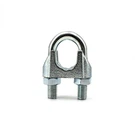


Can shackles be used for animal restraint? Well, that's a question I've been getting a lot lately as a shackle supplier. I've been in the business for quite a while, and I've seen all sorts of uses for our products. But when it comes to using shackles for animals, it's a bit of a tricky topic.
First off, let me tell you a bit about the shackles we offer. We have a wide range of high - quality shackles, like the Trawling Chain Shackle with Square Head Pin. This shackle is known for its durability and strength. It's made to withstand tough conditions, which is why it's popular in the trawling industry. Then there's the Jis Type Screw Pin Anchor Shackle. This one is great for all sorts of anchoring needs, and it's designed with a screw pin for easy installation and removal. And don't forget the Jis Type Screw Pin Chain Dee Shackle with Counter Sunk Head. It's a versatile shackle that can be used in many different applications.
Now, back to the question of using shackles for animal restraint. There are definitely some scenarios where it might seem like a good idea. For example, in a veterinary setting, if an animal needs to be held still for a short - term medical procedure, a properly sized and used shackle could potentially be used as part of a restraint system. But it's extremely important to do it right.
Animals are sensitive creatures, and their well - being should always be the top priority. Using a shackle on an animal requires a deep understanding of the animal's anatomy and behavior. You can't just slap a shackle on any animal and expect it to work out well. For instance, if the shackle is too tight, it can cause physical harm to the animal, like cuts, bruises, or even nerve damage. On the other hand, if it's too loose, the animal can easily escape, which is not only dangerous for the animal but also for the people around it.
In the wild animal conservation field, sometimes researchers need to restrain animals for tagging or medical examinations. In these cases, shackles are rarely used on their own. They are usually part of a more comprehensive restraint system that includes sedation and other safety measures. The goal here is to minimize stress and harm to the animal while still getting the job done.


But there are also some serious ethical concerns. Animals have the right to live without unnecessary suffering. If a shackle is used in a way that causes pain or distress to the animal, it goes against these ethical principles. In many countries, there are strict laws and regulations regarding animal welfare. These laws govern how animals can be restrained and what methods are acceptable.
If you're thinking about using shackles for animal restraint, you need to do your homework. Consult with veterinarians, animal behaviorists, or experts in the field. They can give you valuable advice on whether it's appropriate and how to do it safely.
Let's talk about the practical aspects of using shackles for animals. When choosing a shackle, you need to consider the size and strength of the animal. A small dog will need a much different shackle than a large horse or a wild bear. The material of the shackle also matters. You want something that is strong enough to hold the animal but also smooth and non - abrasive to prevent injury.
Corrosion is another factor. If the shackle is going to be used outdoors or in a wet environment, it needs to be made of a corrosion - resistant material. Our shackles are made with high - grade materials that can withstand the elements, so you don't have to worry about rust or degradation over time.
Training is also crucial. People who are going to be using the shackles on animals need to be properly trained. They should know how to apply the shackle correctly, how to adjust it, and how to monitor the animal's reaction. Without proper training, there's a high risk of mistakes that can harm the animal.
In some cases, there are alternative methods of animal restraint that might be more suitable. For example, soft harnesses or padded straps can be used for many domestic animals. These options are often more comfortable for the animal and less likely to cause injury.
But if you've done your research, consulted the experts, and determined that a shackle is the right choice for your specific situation, we're here to help. We have a wide selection of shackles that can meet your needs. Whether you need a small, lightweight shackle for a pet or a heavy - duty one for a large animal, we've got you covered.
Our customer service team is always available to answer your questions. We can help you choose the right shackle, provide you with technical specifications, and even offer advice on installation and use. If you're interested in purchasing our shackles for animal restraint or any other application, don't hesitate to get in touch. We're eager to work with you and ensure that you get the best product for your needs.
In conclusion, while shackles can potentially be used for animal restraint in certain situations, it's a complex issue that requires careful consideration. Animal welfare should always be at the forefront of your decision - making process. If you're confident that a shackle is the way to go, we're here to support you every step of the way.
References
- "Animal Welfare Act and Regulations", United States Department of Agriculture
- "Ethical Guidelines for the Use of Animals in Research", International Society for Applied Ethology
- "Veterinary Manual of Animal Restraint and Handling", various authors