




Can turnbuckles be used in oil and gas industry? That's a question I've been asked a bunch of times as a turnbuckle supplier. In this blog, I'm gonna dig deep into this topic and share my thoughts and knowledge.
First off, let's understand what turnbuckles are. Turnbuckles are basically devices made up of two threaded eye bolts connected to a central body. You can adjust the length of the turnbuckle by rotating the central body, which either tightens or loosens the eye bolts. They're commonly used for tensioning cables, wires, and rods in various industries.
Now, let's talk about the oil and gas industry. It's a tough and demanding sector where equipment has to withstand extreme conditions. The environment in oil and gas operations can be harsh, with high pressures, corrosive substances, and extreme temperatures. So, for any equipment to be used in this industry, it has to meet some pretty strict standards.
One of the key requirements in the oil and gas industry is corrosion resistance. The materials used in the industry are constantly exposed to corrosive elements like saltwater, sulfur compounds, and various chemicals. Turnbuckles made from materials like stainless steel or galvanized steel are great options. Stainless steel has excellent corrosion resistance properties, making it suitable for long - term use in harsh environments. Galvanized steel, on the other hand, has a zinc coating that provides a protective layer against corrosion. For example, our US Type Galvanized Forged Turnbuckle Eye and Eye is a popular choice. The galvanized finish helps it resist corrosion, which is crucial in oil and gas applications.
Another important factor is strength. In oil and gas operations, turnbuckles may be used to support heavy loads or to maintain tension in critical structures. They need to have high tensile strength to ensure they don't fail under stress. High - quality forged turnbuckles are designed to handle heavy loads. Our Hamburg Dd Turnbuckle is forged to provide superior strength. The forging process aligns the grain structure of the metal, making it stronger and more durable compared to other manufacturing methods.
Temperature resistance is also a big deal. Oil and gas operations can take place in extremely cold or hot environments. Turnbuckles need to maintain their mechanical properties across a wide range of temperatures. Some specialized alloys are used to ensure that turnbuckles can function properly in these extreme conditions.
When it comes to specific applications in the oil and gas industry, turnbuckles can be used in a variety of ways. In offshore platforms, they can be used to tension the mooring lines that keep the platform in place. The ability to adjust the tension is crucial as the sea conditions can change, and the mooring lines need to be tightened or loosened accordingly.
On drilling rigs, turnbuckles can be used to support and adjust the position of various components. For example, they can be used to tension the guy wires that provide stability to the derrick. This helps ensure that the drilling operations can be carried out safely and efficiently.
In pipeline construction, turnbuckles can be used to align and tension the pipes during installation. They help in maintaining the proper alignment of the pipeline sections, which is essential for preventing leaks and ensuring the integrity of the pipeline.
Now, let's talk about the regulatory aspect. The oil and gas industry is highly regulated, and any equipment used in this sector has to comply with relevant standards and codes. Turnbuckle suppliers need to ensure that their products meet these requirements. This includes proper testing and certification. For example, turnbuckles may need to be tested for their load - bearing capacity, corrosion resistance, and other mechanical properties.

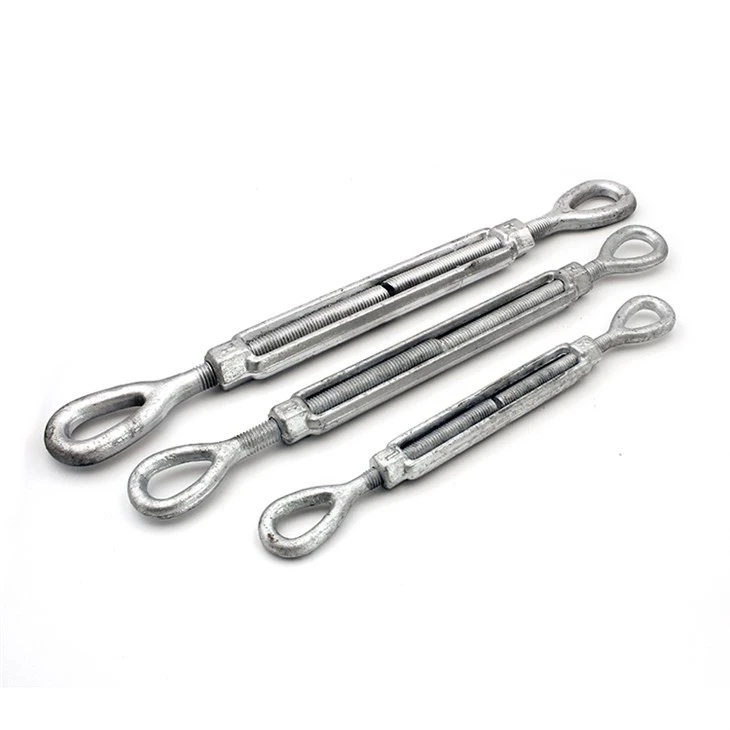
As a turnbuckle supplier, I've seen the demand for high - quality turnbuckles in the oil and gas industry growing. Customers are looking for products that are reliable, durable, and compliant with industry standards. Our Turnbuckle Rigging Screw is designed to meet these requirements. We conduct rigorous quality control checks to ensure that each turnbuckle meets the necessary standards.
In conclusion, turnbuckles can definitely be used in the oil and gas industry. With the right materials, design, and manufacturing processes, they can provide the strength, corrosion resistance, and temperature resistance needed for the harsh conditions in this sector. Whether it's for offshore platforms, drilling rigs, or pipeline construction, turnbuckles play an important role in ensuring the safety and efficiency of oil and gas operations.
If you're in the oil and gas industry and are looking for high - quality turnbuckles, I'd love to have a chat with you. We can discuss your specific requirements and find the best turnbuckle solutions for your projects. Don't hesitate to reach out for more information and to start a procurement discussion.
References
- Industry standards and guidelines for oil and gas equipment
- Technical literature on materials used in turnbuckle manufacturing
- Case studies of turnbuckle applications in oil and gas projects