


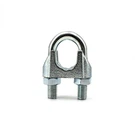


What is the hardness of the G70 HOOK?
As a dedicated supplier of G70 HOOKs, I've spent years delving into the intricacies of these essential lifting tools. One of the most frequently asked questions I encounter is about the hardness of G70 HOOKs. In this blog post, I'll share in - depth knowledge about the hardness of G70 HOOKs, its significance, and how it relates to the performance of these hooks.
Understanding G70 HOOKs
G70 HOOKs, also known as grade 70 hooks, are widely used in the transportation and rigging industries. They are made from high - strength carbon steel, which is heat - treated to achieve specific mechanical properties. These hooks are designed to handle heavy loads and are commonly found in applications such as trucking, logging, and construction. The "G70" designation indicates that the hook has a minimum yield strength of 70,000 pounds per square inch (psi) and a minimum ultimate tensile strength of 100,000 psi.
The Concept of Hardness in G70 HOOKs
Hardness is a measure of a material's resistance to local deformation, such as indentation, scratching, or wear. In the case of G70 HOOKs, hardness is a crucial property that affects their overall performance and durability. A hook with the appropriate hardness can withstand the stresses and strains of heavy - duty use without deforming or breaking.
The hardness of G70 HOOKs is typically measured using the Rockwell hardness scale, specifically the Rockwell C scale (HRC). The Rockwell C scale is suitable for measuring the hardness of hardened steels, which is the material used for G70 HOOKs. The hardness value on the Rockwell C scale can provide insights into the hook's ability to resist abrasion, cutting, and deformation under load.


Ideal Hardness Range for G70 HOOKs
The ideal hardness range for G70 HOOKs is typically between 32 and 38 HRC. This range is carefully calibrated to balance the hook's strength and toughness. If the hardness is too low, the hook may be prone to deformation under heavy loads. For example, if a hook is used to lift a large and heavy load, a low - hardness hook might bend or stretch, which can compromise the safety of the lifting operation.
On the other hand, if the hardness is too high, the hook becomes brittle. A brittle hook is more likely to crack or break when subjected to sudden impacts or shock loads. In a real - world scenario, a hook with excessive hardness could shatter if it is dropped or experiences a sudden jolt during a lifting operation, posing a significant safety hazard to workers and equipment.
Factors Affecting the Hardness of G70 HOOKs
Several factors can affect the hardness of G70 HOOKs. One of the primary factors is the heat - treatment process. Heat treatment involves heating the steel to a specific temperature and then cooling it at a controlled rate. This process can alter the microstructure of the steel, which in turn affects its hardness.
The composition of the steel also plays a vital role. G70 HOOKs are made from high - strength carbon steel, and the precise amount of carbon and other alloying elements can influence the hardness. For example, increasing the carbon content can generally increase the hardness of the steel, but it also needs to be balanced with other elements to ensure sufficient toughness.
Importance of Hardness in G70 HOOK Performance
The hardness of G70 HOOKs directly impacts their performance in various applications. In transportation, where hooks are used to secure heavy loads on trucks and trailers, the right hardness ensures that the hook can hold the load firmly without deforming. This is crucial for preventing load shifting during transit, which can lead to accidents on the road.
In the construction industry, G70 HOOKs are used for lifting and rigging heavy building materials. A hook with the proper hardness can withstand the repeated stress of lifting and lowering heavy items, ensuring long - term reliability and safety on the construction site.
Related Products and Their Applications
We also offer a range of related products that complement our G70 HOOKs. For example, the 322a 322c Swivel Hook Forged Alloy Carbon is a great option for applications where a swiveling action is required. This hook is made from forged alloy carbon, which provides excellent strength and durability. It can be used in marine applications, as well as in industrial settings where flexible lifting is needed.
The H330 and A330 Forged Clevis Grab Hook High Test Or Alloy is another useful product. These hooks are designed with a clevis grab mechanism, which allows for easy attachment and detachment of loads. They are commonly used in towing and recovery operations, as well as in general rigging tasks.
The H323 and A323 Forged Eye Grab Hook High Test Or Alloy is suitable for applications where an eye - type connection is needed. These hooks are made from high - test or alloy steel, providing high strength and resistance to wear. They can be used in overhead lifting operations and in the mining industry.
Quality Control and Hardness Testing
As a responsible supplier, we have strict quality control measures in place to ensure that our G70 HOOKs meet the required hardness standards. We conduct regular hardness testing using state - of - the - art equipment. This testing is done at multiple stages of the manufacturing process, from the raw material inspection to the final product verification.
By adhering to strict quality control procedures, we can guarantee that each G70 HOOK we supply has the appropriate hardness, which translates to reliable performance and long - term durability for our customers.
Conclusion and Call to Action
In conclusion, the hardness of G70 HOOKs is a critical factor that determines their performance, safety, and durability. A hardness range of 32 - 38 HRC on the Rockwell C scale is ideal for these hooks, as it provides a good balance between strength and toughness.
If you are in the market for high - quality G70 HOOKs or any of our related products, we invite you to contact us for procurement and further discussions. We are committed to providing the best products and services to meet your lifting and rigging needs.
References
- ASME B30.10 - Hooks: Safety standard for hooks used in lifting operations.
- ASTM A952 - Standard Specification for Carbon and Alloy Steel Chain, Grade 70, for Trucking Service: Defines the requirements for grade 70 chain and related components.