


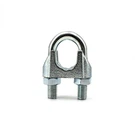


Hey there! I'm a supplier of G43 hooks, and I often get asked whether these hooks require regular maintenance. Well, let's dive right into it.
First off, what exactly is a G43 hook? G43 hooks are high - strength, heat - treated alloy steel hooks commonly used in various heavy - duty lifting and rigging applications. They're known for their durability and reliability, but that doesn't mean they're maintenance - free.
Why Regular Maintenance is a Must
Just like any piece of equipment that's used in tough working conditions, G43 hooks take a beating. They're constantly under stress from the weight they're lifting, and they can be exposed to all sorts of environmental factors.
One of the main reasons for regular maintenance is safety. When you're using a G43 hook to lift heavy loads, there's no room for error. A small crack or a bit of excessive wear can compromise the hook's integrity and lead to a catastrophic failure. Imagine a huge load dropping because of a faulty hook – it could cause serious injuries and significant property damage.
Another reason is to extend the lifespan of the hook. With proper maintenance, a G43 hook can serve you for a long time. By regularly inspecting and taking care of it, you can catch any potential issues early on and prevent them from getting worse.
What Does Regular Maintenance Entail?
-
Visual Inspections: This is the most basic form of maintenance, and it should be done before every use. Look for any signs of wear, such as cracks, nicks, or deformation. Check the hook's throat opening to make sure it hasn't widened beyond the manufacturer's specifications. Also, examine the latch mechanism (if it has one) to ensure it's working properly. If you notice any issues during the visual inspection, the hook should be taken out of service immediately.


-
Cleaning: G43 hooks can get dirty, especially if they're used in construction sites or other dirty environments. Dirt and debris can accumulate in the hook's crevices and can accelerate wear. Use a wire brush or a suitable cleaning agent to remove any dirt, rust, or other contaminants. Make sure to dry the hook thoroughly after cleaning to prevent rust from forming.
-
Lubrication: If the hook has moving parts, such as a latch or a swivel, they need to be lubricated regularly. Lubrication helps to reduce friction and wear, and it ensures that the moving parts operate smoothly. Use a high - quality lubricant that's suitable for the hook's material and the working environment.
-
Load Testing: Periodically, the hook should be load - tested to ensure it can still handle the rated load. This should be done by a qualified professional using the appropriate equipment. Load testing can detect any hidden defects that may not be visible during a visual inspection.
How Often Should Maintenance Be Done?
The frequency of maintenance depends on several factors, such as how often the hook is used, the type of loads it's lifting, and the working environment. In general, a visual inspection should be done before every use. A more thorough inspection, including cleaning and lubrication, should be done at least once a month for hooks that are used frequently. Load testing should be done every year or as recommended by the manufacturer.
Real - World Examples
Let me share a real - world example. I had a customer who was using G43 hooks in a busy construction site. They were using the hooks to lift heavy building materials all day long. At first, they didn't pay much attention to maintenance. After a few months, they started to notice some wear on the hooks. One day, during a routine visual inspection, they found a small crack in one of the hooks. If they hadn't caught it in time, it could have led to a major accident. After that incident, they started a strict maintenance schedule, and they haven't had any problems since.
Other Related Products
If you're in the market for other types of hooks, we also offer H330 and A330 Forged Clevis Grab Hook High Test Or Alloy, H323 and A323 Forged Eye Grab Hook High Test Or Alloy, and H324 and A324 Forged Eye Slip Hook High Test Or Alloy. These hooks are also high - quality products that are suitable for a variety of lifting applications.
Conclusion
So, to answer the question "Does G43 hook require regular maintenance?", the answer is a resounding yes. Regular maintenance is crucial for the safety and longevity of G43 hooks. By following a proper maintenance schedule, you can ensure that your hooks are always in top - notch condition and that they can handle the heavy loads you need them to lift.
If you're interested in purchasing G43 hooks or any of our other products, or if you have any questions about hook maintenance, don't hesitate to reach out. We're here to help you make the right choices for your lifting and rigging needs.
References
- American Society of Mechanical Engineers (ASME) B30.10 - Hooks Standard
- Occupational Safety and Health Administration (OSHA) regulations related to lifting equipment