


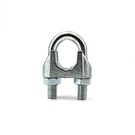


As a supplier of G43 hooks, I've had the privilege of engaging with a wide range of customers across various industries. These hooks are renowned for their strength and durability, making them a popular choice for heavy - duty lifting and rigging applications. However, no product is without its drawbacks, and in this blog post, I'll delve into the disadvantages of G43 hooks.
Limited Versatility
One of the primary disadvantages of G43 hooks is their limited versatility. G43 hooks are designed with a specific set of applications in mind, mainly heavy - duty lifting in industrial settings. Their standardized shape and size are optimized for these particular tasks. For instance, in scenarios where the load requires a more intricate or specialized attachment method, a G43 hook may not be the best option.
Let's say you're working on a project that involves handling irregularly shaped objects. The standard design of a G43 hook might not allow for a secure and stable connection. In contrast, other types of hooks, such as the H324 and A324 Forged Eye Slip Hook High Test Or Alloy, offer more flexibility in terms of how they can be attached to different loads. These hooks can be adjusted more easily to accommodate various shapes and sizes, providing a better fit for non - standard loads.
High Cost
Another significant drawback of G43 hooks is their relatively high cost. The manufacturing process of G43 hooks involves strict quality control and the use of high - grade materials to ensure they meet the required safety standards. This results in a higher price tag compared to some other types of hooks.
For small - scale businesses or projects with tight budgets, the cost of G43 hooks can be a major deterrent. They may need to look for more cost - effective alternatives that can still perform the necessary lifting tasks. For example, the H330 and A330 Forged Clevis Grab Hook High Test Or Alloy might offer a more affordable option for lighter - duty applications. While they may not have the same load - bearing capacity as G43 hooks, they can still get the job done for less demanding tasks at a lower cost.
Maintenance Requirements
G43 hooks require regular and proper maintenance to ensure their continued safe and efficient operation. Due to their high - stress usage in heavy - duty applications, they are more prone to wear and tear. This includes checking for cracks, deformation, and corrosion on a regular basis.
Failure to maintain G43 hooks can lead to serious safety hazards. For example, a small crack that goes unnoticed can grow over time, eventually causing the hook to fail under load. This not only poses a risk to the workers but also to the equipment and the surrounding environment. In comparison, some other hooks like the 322a 322c Swivel Hook Forged Alloy Carbon may have simpler maintenance requirements. Their design may be less complex, making it easier to inspect and maintain them.
Size and Weight
G43 hooks are generally larger and heavier than many other types of hooks. This can be a disadvantage in situations where space is limited or where a lighter - weight option is preferred. For example, in some confined workspaces, such as inside a small machinery compartment, the large size of a G43 hook may make it difficult to maneuver.
The extra weight of G43 hooks can also add to the overall load of the lifting equipment. This means that the lifting machinery may need to be more powerful to handle the combined weight of the hook and the load. In contrast, smaller and lighter hooks can be more easily integrated into various lifting systems without overburdening the equipment.
Compatibility Issues
G43 hooks are designed to work with specific types of lifting equipment and rigging systems. This can lead to compatibility issues when trying to use them with non - standard or older equipment. For example, if you have an older lifting system that was not originally designed to work with G43 hooks, you may encounter problems with the connection between the hook and the equipment.
This lack of compatibility can result in additional costs and time spent on modifying the equipment to make it work with the G43 hooks. In some cases, it may even be necessary to purchase new equipment that is specifically designed to be compatible with G43 hooks. Other hook types may offer more universal compatibility, allowing for easier integration with a wider range of lifting systems.
Safety Concerns in Some Applications
Although G43 hooks are designed to be safe for heavy - duty lifting, there are still some safety concerns in certain applications. For example, in applications where there is a risk of the hook being accidentally disengaged, the standard design of a G43 hook may not provide sufficient protection.
In situations where the load is subject to sudden movements or vibrations, the hook may come loose if not properly secured. This can lead to a dangerous situation where the load could fall and cause injury or damage. Some other hooks are designed with additional safety features, such as locking mechanisms, to prevent accidental disengagement.
Conclusion
While G43 hooks have many advantages, such as their high strength and durability, it's important to be aware of their disadvantages. The limited versatility, high cost, maintenance requirements, size and weight, compatibility issues, and safety concerns in some applications are all factors that need to be considered when choosing a hook for a particular job.
As a supplier, I understand that every customer has unique needs and requirements. That's why we offer a wide range of hooks, including the ones mentioned above, to provide the best solution for each specific application. If you're facing challenges with your current lifting and rigging needs or are unsure which hook is the right choice for your project, I encourage you to reach out to us for a detailed discussion. We can help you evaluate your options and find the most suitable hook that balances performance, cost, and safety.


References
- Industry standards for lifting hooks
- Manufacturer's specifications for G43 hooks
- Case studies on lifting equipment failures