


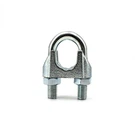


When it comes to the world of rigging and lifting equipment, shackles are an essential component. They are used for a wide range of applications, from securing loads on ships to lifting heavy machinery in construction sites. Among the various types of shackles available, D - shackles and bow - shackles are two of the most commonly used. As a shackle supplier, I often encounter customers who are unsure about the differences between these two types of shackles. In this blog post, I will delve into the details of D - shackles and bow - shackles, highlighting their unique features, applications, and advantages.


What is a D - Shackle?
A D - shackle, also known as a Dee shackle, is named for its distinctive D - shaped design. This design gives the D - shackle a narrow opening at the top, which is typically used to attach to a single point of load. The sides of the D - shackle are straight and parallel, providing a strong and stable connection.
One of the key features of a D - shackle is its high strength - to - weight ratio. The shape of the D - shackle allows it to concentrate the load along its straight sides, making it ideal for applications where the load is applied in a single direction. For example, in a situation where you are lifting a heavy object using a crane, a D - shackle can be used to attach the lifting hook to the object. The narrow opening of the D - shackle ensures that the load is centered and evenly distributed, reducing the risk of the shackle twisting or bending under stress.
There are different types of D - shackles available, including the US Type Forged Round Pin Chain Dee Shackle G215 and the Jis Type Screw Pin Chain Dee Shackle with Counter Sunk Head. The US Type Forged Round Pin Chain Dee Shackle G215 is a popular choice for many industries due to its high strength and durability. It is made from forged steel, which provides excellent resistance to wear and tear. The round pin design allows for easy installation and removal, making it convenient for use in various applications.
The Jis Type Screw Pin Chain Dee Shackle with Counter Sunk Head, on the other hand, is designed with a screw pin that can be easily tightened or loosened. The counter - sunk head of the screw pin ensures that it does not protrude, reducing the risk of snagging or catching on other objects. This type of D - shackle is commonly used in applications where quick and easy attachment and detachment are required.
What is a Bow - Shackle?
A bow - shackle, also known as an anchor shackle, has a wider, more oval - shaped design compared to a D - shackle. The bow - shaped opening of the shackle allows for multiple connections to be made at the same time. This makes it suitable for applications where the load needs to be distributed across multiple points.
The main advantage of a bow - shackle is its versatility. The wide opening of the bow - shackle can accommodate multiple ropes, chains, or cables, making it ideal for use in complex rigging systems. For example, in a marine application, a bow - shackle can be used to connect multiple mooring lines to an anchor. The ability to connect multiple lines at once allows for a more stable and secure connection, reducing the risk of the anchor breaking loose.
One of the popular types of bow - shackles is the US Type Forged Screw Pin Anchor or Bow Shackle G209. This shackle is made from high - quality forged steel, which provides excellent strength and durability. The screw pin design allows for easy installation and removal, and it can be tightened to ensure a secure connection. The US Type Forged Screw Pin Anchor or Bow Shackle G209 is commonly used in marine, construction, and industrial applications.
Key Differences between D - Shackles and Bow - Shackles
Shape and Design
The most obvious difference between a D - shackle and a bow - shackle is their shape. The D - shackle has a narrow, D - shaped opening, while the bow - shackle has a wider, oval - shaped opening. This difference in shape affects their functionality and the types of applications they are suitable for.
Load Distribution
D - shackles are designed to handle loads that are applied in a single direction. The straight sides of the D - shackle allow the load to be concentrated along a single axis, providing a strong and stable connection. Bow - shackles, on the other hand, are better suited for distributing loads across multiple points. The wide opening of the bow - shackle allows for multiple connections to be made, which helps to spread the load evenly.
Application
D - shackles are commonly used in applications where a single - point connection is required, such as lifting heavy objects with a crane or attaching a chain to a hook. Bow - shackles are more versatile and are often used in applications where multiple connections are needed, such as in marine rigging, construction, and industrial settings.
Strength
Both D - shackles and bow - shackles are designed to be strong and durable. However, due to their different shapes, their strength characteristics may vary. D - shackles generally have a higher strength - to - weight ratio, making them ideal for applications where weight is a concern. Bow - shackles, while still strong, may be slightly heavier due to their wider design, but they offer the advantage of being able to handle multiple loads.
Choosing the Right Shackle for Your Application
When choosing between a D - shackle and a bow - shackle, it is important to consider the specific requirements of your application. Here are some factors to keep in mind:
Load Direction
If the load is applied in a single direction, a D - shackle may be the better choice. The straight sides of the D - shackle can handle the load more effectively, reducing the risk of bending or twisting. If the load needs to be distributed across multiple points, a bow - shackle is more suitable.
Number of Connections
If you need to make a single connection, a D - shackle is sufficient. However, if you need to connect multiple ropes, chains, or cables, a bow - shackle is the way to go.
Environment
The environment in which the shackle will be used is also an important consideration. For example, in a marine environment, a bow - shackle may be more suitable due to its ability to handle multiple mooring lines. In a construction site, a D - shackle may be preferred for lifting heavy machinery.
Conclusion
In conclusion, D - shackles and bow - shackles are both essential components in the world of rigging and lifting. Each type of shackle has its own unique features, advantages, and applications. As a shackle supplier, I understand the importance of providing customers with the right type of shackle for their specific needs. Whether you need a D - shackle for a single - point connection or a bow - shackle for a multi - point application, I can help you find the perfect solution.
If you are in the market for high - quality shackles, I invite you to contact me for more information. We offer a wide range of D - shackles and bow - shackles, including the US Type Forged Round Pin Chain Dee Shackle G215, Jis Type Screw Pin Chain Dee Shackle with Counter Sunk Head, and US Type Forged Screw Pin Anchor or Bow Shackle G209. Our team of experts can assist you in selecting the right shackle for your application and provide you with all the necessary technical support. Let's start a conversation and find the best shackle solution for your project.
References
- "Rigging Handbook" by Crosby Group
- "Marine Rigging and Anchoring" by Nigel Calder